Eugen Gutnov (Gutnoff), an Ossetian publisher in Berlin: letters to Kirill
Eugen Gutnov (Gutnoff) corresponded with his brother Kirill until 1935. These letters became the principal “material evidence” supporting the charge brought against Kirill following his arrest in 1937: participation in a “counter-revolutionary, bourgeois-nationalist insurgent organisation.” Zefira Butaeva published and annotated the correspondence in “An Ossetian Publisher from Berlin” (Daryal, 1991, No. 3, pp. 160–176), the source of both the letters and the memoir reproduced below.
An Ossetian Publisher from Berlin
...I awoke at night to a noise. The light was on. Beside my couch, Father sat on a chair, pulling on his socks with trembling fingers.
Several men in military uniform walked about the room, their boots pounding the floor. Then they all left, taking Father with them.
Mother sobbed and wailed: “Woe is me! Our hearth is destroyed!” Grandfather stood silent, leaning on his ever-present stick. Neither of them noticed that, for the first time in twenty years of living in the same house, he had heard his daughter-in-law’s voice: according to Ossetian custom, Mother did not speak in the presence of her father-in-law. My sister and I cried with Mother, but we did not fully understand what had happened. We did not know that we would never see Father again.
Father disappeared. With him went all our family’s “riches”: the gramophone with its enormous horn, which Father wound up on special occasions; the album bound in green plush, filled with beautiful Easter cards that I proudly showed my friends; and the “holy of holies,” the typewriter. It was the most valuable object in our home. We could touch it only in Father’s presence. As his favourite, I was sometimes allowed to tap out a few words with one finger.
All these things had come from the mythical Uncle Eugen in far-off Berlin, where Father had travelled in 1924 to obtain a Linotype machine.
I did not know what a Linotype machine was, nor did I remember my uncle — he had visited Ossetia in 1927, when I was only one — but to me he seemed fabulously wealthy. It was thanks to his gifts, two suits and a brown felt hat, that Papa was the smartest and most handsome of men. I did not notice then that the suits hung rather loosely on him: Eugen was much larger than his brother.
Our family had a “cult” of Uncle. He was consulted on every matter, if not directly then by asking: “What would Dziborka say about this?” — the name everyone at home had used for him in childhood.
Uncle’s letters were read aloud several times and then placed in the green album that always lay on the chest of drawers. Sometimes on a Sunday everyone in the house would fall silent and walk on tiptoe: Father was writing a letter to Berlin. Once I had learned to write, I was allowed to add a few words to Father’s letters, and I was immensely proud of myself.
And then it all came to an end. It was 28 October 1937.
The next day Mother gathered a small bundle and set out to look for Father. I went everywhere with her: she did not speak Russian fluently and, when nervous, could not utter a word at all.
I remember that first we went to the prison on Noya Buachidze Street — it is still there — and stood half the day in an enormously long queue. Through a little window someone growled: “We have no one by that name!” How precisely a similar scene is shown in Abuladze’s film Repentance!
Over the following days we methodically visited every place where detainees were being held. There were many such places in the city. Wherever windows had bars, there were prisoners.
At last, in the military commissariat building — then on Kirov Street, where the Agricultural Institute now stands — they accepted a parcel from us. Two weeks later they accepted another.
One day a rumour swept through the city that the prisoners would be taken away during the night. When darkness fell, we went to the railway station. Streams of people moved along Kirov Street, furtively and silently, afraid to speak to one another. We approached the station and stood for a long time, hiding in courtyards and the entrances of nearby houses. Dawn came, and we dispersed without learning anything.
When we brought another parcel of freshly washed warm underwear in mid-December, we were told: “Transferred!” It sounded plausible: there really must have been a transport that night, and Father had been exiled. Until the end of her life — she died in 1983 — Mother tormented herself because she had failed to give him the warm clothes. Poor Mother did not realise that by then Father no longer needed anything.
And so began our life without Father, who had been kind, gentle, and cheerful. How I missed him! How many tears I shed over his balalaika, on which he played Ossetian melodies while singing in his beautiful voice. How many interesting things he knew! He was the first to tell me about Stalin, “an extraordinary man, a leader, Lenin’s friend.” Under the influence of his stories, I began to love Stalin fanatically. How I envied my contemporary Mamlakat Nakhangova, who had embraced Stalin! I wept with happiness on 1 May 1948, when, marching with the Moscow State University column past the Mausoleum, I was granted the sight of Him. And I was not alone. Veterans marched in our column, and many had tears in their eyes. I carried that “love” with me until the Twentieth Party Congress.
Father also instilled in me a passion for reading. He loved children and enjoyed translating children’s books from Russian into Ossetian. I remember one of them, Kipling’s Rikki-Tikki-Tavi. Several years ago I came across the book in Ossetian, but alas, the translator named was not K. Gutnov.
We also had books printed at E. Gutnov’s press in Berlin. Eugen entrusted all matters relating to the distribution of his publications in Ossetia to his brother, “my authorised representative,” as he called Father in a letter preserved in the Central State Archive of the North Ossetian ASSR. I can still picture Iron Fandyr, Schiller’s William Tell, a collection of Ossetian stories and anecdotes, and postcards bearing a photograph of Kosta. We still had all these after Father’s arrest. What became of them I do not know. Mother tore some things up in anger, believing Uncle responsible for Father’s arrest: during the search they had taken everything bearing German inscriptions.
Mother, a woman without education or a profession, was left to care for our eighty-year-old grandfather, my brother, who was still at school, and me, a fourth-form pupil; my elder sister was married. Mother tried to find work at the printing house, where she had once spent a year in the bindery and where Father had worked for many years before his arrest, but they would not take her. She found work washing dishes in a canteen and later as an unskilled labourer at a cannery.
Beginning in 1938, I wrote letter after letter. First to “beloved Stalin,” then to Beria. I wrote about what a good father I had, what a loyal Leninist he was, and what a monstrous mistake his arrest had been. There was never an answer.
Only once, in 1940, was I summoned to the NKVD. Holding an envelope — evidently my letter — a military man persistently demanded to know how I knew that letters to Beria should be addressed to Dzerzhinsky Square. Then he said: “Your father is an enemy of the people. He has been exiled for ten years without the right of correspondence.” Naively, we began waiting for those ten years to end.
In 1947, in Moscow, on that same Dzerzhinsky Square, I enquired about Father’s fate and was told that he had died in a camp in 1942. Several years later my sister was issued a death certificate stating that K. S. Gutnov had died of lobar pneumonia on 23 December 1943.
What were we to believe? Nothing. It was all a lie. We now know that “ten years without the right of correspondence” meant execution. Yet even in 1955, when issuing a certificate, the Supreme Court of the North Ossetian ASSR evasively wrote that the case of Father, “convicted by the former NKVD troika of the North Ossetian ASSR, has been terminated...” Convicted of what? It did not say.
Many years had passed since 1937. Father was born in 1892 and would scarcely still have been alive. Some may think the past should not be disturbed. We already know so much about that time, so much has been written, and we have read The Gulag Archipelago. Yet the older I grew, the more strongly I wanted to learn the truth about my father and his fate.
And then came glasnost. In 1989 the KGB of the North Ossetian ASSR informed me — cautiously and only orally, for the time being — that by a decision of the former NKVD troika dated 7 December 1937, K. S. Gutnov had been executed on 10 December 1937. He was charged with having “been a member of a counter-revolutionary, bourgeois-nationalist, espionage and insurgent organisation; conducted counter-revolutionary propaganda and intelligence work on behalf of fascist Germany.” No more and no less: the classic assortment of every conceivable label.
At the First Congress, when the chairman of the KGB and a deputy prosecutor general, during confirmation in their posts, answered deputies’ questions by saying that former victims of repression and their closest relatives could examine criminal case files, I began writing again...
And now I turn the pages of this yellowed file: the arrest warrant, inventory of confiscated belongings, questionnaire, interrogation records, indictment, troika decision, and the certificate recording that the sentence was carried out on 10 December 1937 at 8 p.m. Could more than fifty years really have passed? Why, then, did my chest tighten and my legs buckle when I left the Chief Military Prosecutor’s Office? Perhaps those who say that they discourage relatives from examining case files only out of compassion, to protect them from shock, are sincere after all.
Together with Father’s file were those of eight more “criminals,” alleged members of some “People’s Party.” Ambalov Tsotsko Bitsoyevich, Zangiyev Babu Kasayevich, Dzasokhov Mikhel Tasoyevich, Dulayev Kambolat Kutsikoyevich, Ktsoyev Bekmurza Vasilyevich, Fardzinov Khandzheri Urusbiyevich, and Aladzhikov Budzi Nikolayevich were executed at the same time as Father.
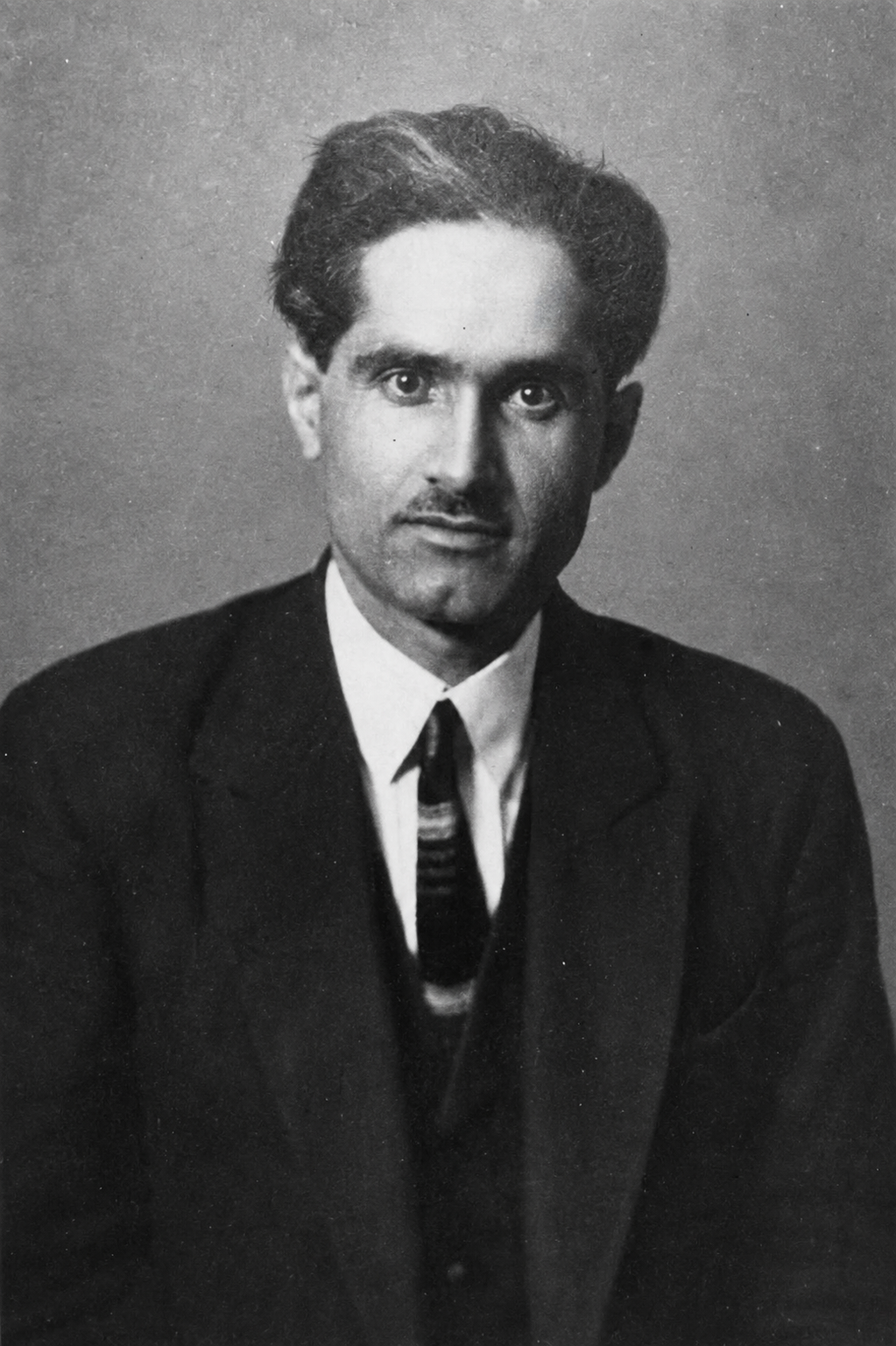
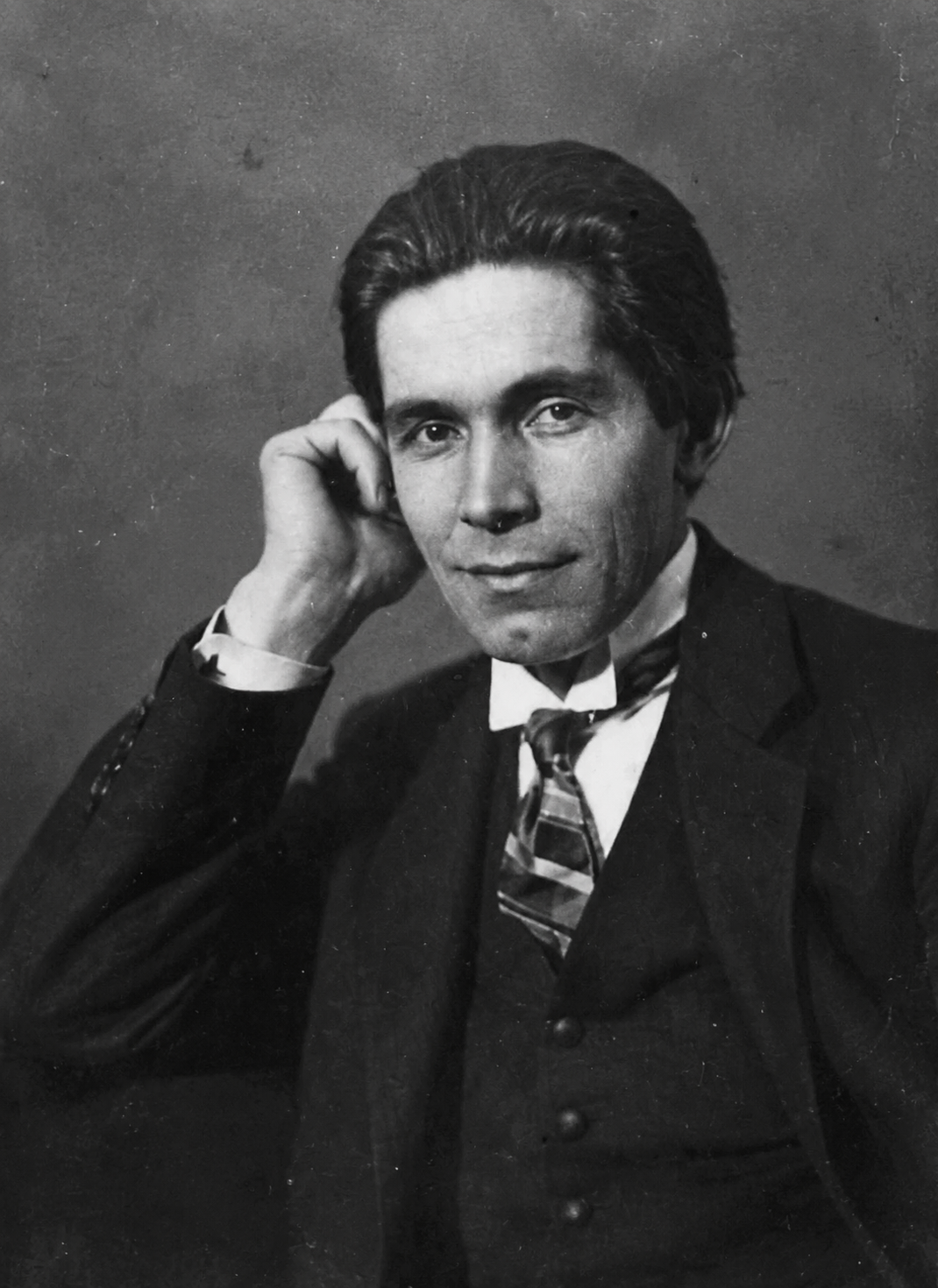
The indictment was drawn up by V. A. Boyarsky, now known throughout the country as an executioner who can no longer even be prosecuted “because the limitation period for his crimes has expired.” Against the background of the atrocities attributed to him, the case of my father and his eight “accomplices” is a drop in the ocean. Even on the list of those sentenced by the troika on that single day, my father’s name appeared in the second hundred. If his “crime” was contact with a brother who had lived in Germany since 1912, the others probably did not have even that.
Eugen’s letters to Father were filed in the case as physical evidence. After reading them, the charge that Father supplied his brother with information about printing houses in Ordzhonikidze and their addresses seems particularly absurd. The letters show that Eugen was thoroughly informed about the printing trade throughout the world, not only in Ossetia.
I asked for the letters to be returned. That was impossible while the Boyarsky case remained unresolved, so I was given photocopies.
I read the letters again and again, and an image of my uncle rises before me: an intelligent, practical, educated man. From the earliest letters preserved in the archive to the last, written in 1968, one senses his love for Ossetia. I remember everything our family knew about him.
Still very young, he left his native village of Dzivgis and became a typesetter at a printing house in Vladikavkaz. In 1908 he moved to Petersburg, where he worked and studied. In 1912, however, he was arrested for taking part in disturbances and, on release, forbidden to reside in Russia’s central provinces. Eugen then left for Germany.
In a letter of 1922 preserved in the archive, Eugen wrote without elaboration that he had gone abroad “to complete my study of the printer’s art.” Our family, however, knew a different account, according to which his departure had been forced. Had the journey been planned, Eugen would hardly have brought his six-year-old brother Elbrus to live with him in Petersburg in 1912. Elbrus also remembered that one day his brother did not come home for the night and one of Eugen’s friends took the boy in. A few days later Elbrus was sent back to Vladikavkaz.
Contact with Eugen was lost during the World War, the Revolution, and the Civil War. Correspondence resumed in the early 1920s. By then he was firmly established in Berlin. At first he worked as a typesetter in a small private printing house. He fell in love and soon married Frida, the owner’s daughter. When his father-in-law died and Eugen became the owner of the printing house, he began publishing literature in Ossetian, above all the work of Kosta Khetagurov, whom he had admired since his school days in Dzivgis, when Iron Fandyr first came into his hands and became his guiding star — “mæ tsardy rukhs.” Even today it is impossible to read without emotion the words that accompanied Eugen’s 1922 edition: “...I say to Kosta: ‘Hallowed be thy name! All Ossetia is grateful to you!’ And to his book: ‘A happy journey to our native Ossetia.’” Eugen named his only son, born in 1924, after his beloved poet and called him Kosta, not Kostya.
That same year Eugen asked the Department of Public Education to help obtain a visa for Elbrus to travel to Germany. His letters suggest two motives: first, to help a brother who “hungers for better conditions for intellectual work and strives to break free from the grip of the difficult life around him”; second, to open a path to European culture for talented young Ossetians. “The Department of Public Education would perform a sacred duty not only towards my brother if it helped me organise his journey to Berlin. Perhaps other hardworking young men from our region would follow this path... The peoples of the Caucasus — Georgians, Armenians, Tatars — did so long ago. Over these years I have met hundreds of young men from those peoples studying here at state, public, or their own expense, but not one Ossetian among them, which I have always bitterly regretted. Now that the fate of our education and all our cultural progress is in our own hands, it is our duty, through our combined efforts, to accomplish this useful undertaking... I shall of course bear the cost of sending my brother; I need only assistance in completing the formalities required to bring him to the German border.”
Eugen’s efforts succeeded, and at the end of 1922 the sixteen-year-old Elbrus left for Germany, where he remained until 1927.
The last letter from Eugen filed in my father’s criminal case is dated 22 May 1935. For many years we knew nothing about him. After 1945 Elbrus tried to discover what had become of his brother. This was difficult because Eugen’s district was in West Berlin. At last, in 1967, the Red Cross provided his address. Elbrus wrote, and Eugen soon replied. I did not find this letter among Elbrus’s papers — he died in 1981 — but I read it and remember its contents. It was handwritten, although Eugen usually typed his letters. It was long and unevenly written, plainly by a trembling hand, yet its reasoning was logical and sound. He still remembered his native language and inserted Ossetian words where appropriate. He wrote that his wife Frida had died of cancer and that Kosta had proved a bad son: he incurred debts, ruined Eugen, and abandoned him. “And now I am a beggar” — I remember those exact words. He asked Elbrus for help in sending foreign currency. “Those without savings are considered paupers here.” What could Elbrus send him? I remember that he did make attempts to convert roubles into marks, but nothing came of them. Remembering how much he had done so that Elbrus could receive an education in Germany, Eugen was hurt and suspected his brother of being unwilling to help. He simply overestimated Elbrus’s means. Eugen’s last two surviving letters are filled with sadness and bitterness. Yet even in the final letter, old and ill, he worries about the fate of the Ossetian books that remained with him.
...It became hard for me to carry all this pain within me, so I publish these letters in the hope that someone will remember with kindness the brothers whose fate was so tragic...
Eugen Gutnov’s letters had already been submitted to the journal when I met an extraordinary man — he knows everything and remembers everything — Kazbek Gutiyev. On the advice of Kazbek Tsitskayevich, I consulted the books published by E. Gutnov in Berlin, besides Kosta’s Iron Fandyr, at the Republican Research Library and the library of the Research Institute:
- V. Ya. Ikskul, Caucasian Sketches (in Russian), 1922.
- Andrey Guluyev, In Sleepless Nights (in Russian), 1923.
- Ossetian Humorous Stories and Anecdotes, 1924.
- Schiller, William Tell, translated by Tsotsko Ambalov, 1924. The copy held in the Rare Books Department of the Republican Library bears a presentation inscription from my father to Sarmat Kosirati.
- Georgiy Maliev, Mountain Motifs: Poems (in Russian), 1924.
- Tsotsko Ambalov, The Tale of Batraz, Son of the Nart Khamyts, 1924.
- Korolenko, Makar’s Dream, translated by Tsotsko Ambalov, 1925.
- Tsomak Gadiyev, Waves of Life, 1925.
- The Song of Alguz, 1922.
- The Gospels (in Ossetian).
- A tear-off calendar.
The first issue of the Proceedings of the Research Institute of Local History, published in 1925, contained an article by Ts. Gadiyev welcoming Schiller’s appearance in Ossetian. While highly praising Tsotsko Ambalov’s translation, Gadiyev also noted the quality of the edition: “The physical qualities of the edition leave nothing to be desired. The printing, paper, old illustrations from chronicles, and so forth all create an impression of exceptional solidity that cannot be claimed for any Ossetian publication to date...”
The same issue included an article by Andrey Guluyev on the publication of Georgiy Maliev’s Mountain Motifs, which likewise observed: “The book is well produced, like E. Gutnov’s other publications.”
Several copies also survive of books translated by K. Gutnov and published in Vladikavkaz in 1931 — Chekhov’s Kashtanka, Bodström’s How the She-Wolf Lived in the World, and Zamchalov’s To the Melon Field — and Kipling’s Rikki-Tikki-Tavi, published in 1935. Kipling’s book was reissued in 1958. The reverse of the title page states “Translated into Ossetian” without naming the translator. Comparison shows the translations to be identical apart from minor editorial changes.
Eugen’s Letters to His Brother Kirill (1931–1935)
Berlin, 20 August 1931
Dear Kiryusha,
I received your letter of 6 August. It made me very glad. The manager of a publishing house and printing works must above all oversee the organisation and establish close contact between all workshops and their associated departments. That is the manager’s principal task. In private enterprises the manager is also the financial director. I do not know how matters are organised in your case. The costing department must strictly ensure that books and newspapers are sold in a way that yields a profit and thereby places the enterprise on an independent commercial footing. As far as I know, Stalin’s speech obliges every enterprise in the USSR to become self-supporting; that is, state subsidies will no longer be provided, and any enterprise showing a deficit on its balance sheet will have to be liquidated. I mean Stalin’s speech at the latest Central Committee congress, where he set out seven points on the Party’s newest tactics in industry and so forth. Your task, then, is to establish contact among all workshops connected with the enterprise, bind them closely together, and ensure that work proceeds productively and smoothly everywhere. You must fight all gossip and all intriguers. Remove them all from the enterprise, and work will run smoothly. Every job must begin where it should begin and finish on time where it should finish. Senseless running about and unproductive repeated enquiries must be eliminated. Copy must arrive on time. It must be checked for grammar, factual matters, and so on, and typed before being sent for typesetting. Author’s corrections must be reduced to zero. An author must check a manuscript before typesetting and under no circumstances afterwards. Capitalist countries have long worked this way, and it is commercially sound. Only in very poorly organised publishing houses in capitalist countries do authors check manuscripts after typesetting. That must never happen. Moscow too is waging a great struggle against it, but has not yet achieved the objective. You can achieve it. Workers’ correspondents’ notes must be checked and typed at a designated place in the editorial office and sent for typesetting only after being thoroughly verified. Establishing this is your task. You can introduce it and, where necessary, demonstrate the losses caused by the alternative. Resetting costs considerably more than typesetting. From time to time you must inspect the editorial stock of material and monitor its condition. You must also inspect every department daily and ensure the proper, normal course of business. Every cause for complaint must be eliminated. As far as possible, you should visit each day all departments connected with the Ræstdzinad enterprise, including the shops, and consider how to develop more efficient working methods. You must also monitor how and where newspapers and books are dispatched and seek ways to distribute them better. Consult your assistants.
You must hear every worker’s opinion. Introduce the American example. Their practice is this: enterprises have letter boxes, and beside them are printed forms with detachable stubs. Any worker may suggest a new and more profitable method of work. When placing the written suggestion in the box, he tears off the stub, and no one knows who made the proposal. Only when the proposal is accepted and put into practice does the worker present the stub to management and receive a reward for his suggestion. These rewards range from ten to one hundred dollars. Every worker must be interested and encouraged to offer such advice. Whether the reward is financial or moral, there must be some recognition, otherwise he has no interest in the proper course of business.
Everything can be organised in exemplary fashion, Kiryusha. I would gladly help you with practical advice on the spot, where I could see what is being done and how. Without seeing it, however, it is difficult to give specific practical advice. One can speak only in theory, and in theory what I have set out here is correct and proven in practice. Try to make something of it. I advise only one thing: do not belittle yourself or destroy your dignity. I am certain that if you were incapable of doing anything, you would not have been chosen. Believe in your abilities and work with faith in what you are doing. You call yourself uneducated, but in Ossetian you may be the finest authority on the language, and in Russian you have little difficulty. Moreover, I have seen more than one printing-works manager in Moscow and Leningrad with two or three thousand workers who is less literate than you. I could name no fewer than twenty such people. Believe in yourself!
And so I wish you success with all my heart. Write and ask whatever you need. Ask specific questions about what to do and how.
Greetings to you from all of us.
Your Eugen.
Where possible, all the enterprise’s departments should be placed in one building.
Berlin, 28 September 1931
Dear Father,
A few days ago I sent you a parcel of food by post — sugar, grain, fat, and so forth — weighing seventeen German pounds, or 8,500 grams net. Customs duties and all other charges were paid here, so under no circumstances should you pay anything. If for some reason they demand a payment from you, refuse the parcel and tell them to return it to the sender. I will then make a claim here against the office responsible. So please pay no charges for the parcel. Kirill wrote that he had gone to Moscow on business. I have already written to him there. Elbrus writes nothing to me. I received a photograph from Nadya; please thank her. I shall send her a photograph as well. Give my greetings to everyone, all our relatives and acquaintances.
Your Dziborka
(Nadya was Eugen’s sister. — Z. Butaeva.)
Berlin, 22 October 1931
Dear Kiryusha,
I marvel at and envy your calm. I write you an urgent letter, and you do not react to anything at all. I write to Kotikov asking him to look after you, and you simply do not consider it necessary to visit him. Your conduct is disgraceful. I do not understand why you went to Moscow. I am now afraid you have not approached the administration of the Red Directors’ Courses either. What you write about geography, physics, and so forth being required there and elsewhere is nonsense. You came to Moscow and began studying bookkeeping. You could have learnt that in Vladikavkaz. To tell the truth, there was no point in sending you there for that. I do not understand you. You must study, and for that you must mix with people and spend time in enterprises, learning their organisation; at the school, that is, on the courses, you must study the theory. That is your main task. You can learn bookkeeping in Vladikavkaz, Nalchik, or even Mozdok. Kotikov writes to the Trade Mission, to Barens, head of its printing department, asking him to tell me that Kotikov will do everything in his power to help my brother, yet my brother has not considered it necessary to approach him. You see how you behave. If you want to learn, you must meet people, as I wrote to you. Study the organisation of enterprises in connection with publishing, distribution, and so forth, and learn the theory on the courses. Bookkeeping is not your task. Being a bookkeeper is no great art, and bookkeepers’ work is not of great importance; on the contrary, it is decidedly secondary.
I await your answer and serious action.
Greetings,
Your Eugen
Greetings to Elbrus!
(The passages in bold are those that investigators marked as “evidence” when they seized the letter. Kotikov has not been identified; Barens was head of the paper and printing department of the Trade Mission. — Z. Butaeva.)
Berlin, 16 November 1931
Dear Kiryusha,
Only the day before yesterday I sent you a letter, and yesterday I received yours saying that you were moving into a hostel, but you did not say which one. You must tell me immediately. I reached a detailed agreement with Urb., and now you report that your family is not being given the promised sum. That is sad, but I can do nothing. For your part, you must apply pressure there without delay. You absolutely must study at the Red Directors’ Courses and not at the Institute, as far as I know the programmes of both institutions. You must admit that it would be difficult to make a theoretically trained printing engineer out of you; it would require years and years of preparatory work, and one must have a gift for writing and so forth. Do you really suppose you could succeed? I doubt it. You need practical knowledge as a manager, to become a practical leader; I am sure the Red Directors’ Courses will give you that more readily. You already hold a managerial post and must perform it one hundred per cent — that is your task. General knowledge can be acquired independently and with the help of suitable teachers, of whom there are many in Vladikavkaz. You mention subjects such as geometry, biology, chemistry, and so forth, and ask whether I possess such knowledge and whether I studied them. My answer is no, because they were not especially necessary in my work. I learnt what I needed and did not try to acquire abstract knowledge that was not required. But if anyone, even a professor, asks me about printing, I can answer all one hundred questions and give the answers that are needed. Printing is so many-sided that if one studies it deeply, there is no time left for other theories.
Send me your address. Greetings to Elbrus.
Your Eugen
Berlin, 22 February 1935
Dear Kiryusha,
I received your last letter. You are right that we write seldom. Often that has depended on you too. This time you wrote quite a lot. You told me how your children are doing at school. It is a pity that Fuza fell behind at the last moment. Kosta is studying too. He attends what is called a Realschule here and is doing well so far. We cannot complain.
His only foreign language at present is French. Unfortunately, there has not yet been an opportunity for him to learn Russian — there is no one to teach him. I come home in the evening, when the boy is already tired and does not want to study a dry language; besides, I am often away. I now have to travel to Estonia again on business. I must give instruction there and deliver another couple of lectures about innovations. In general, we are living and remain healthy. Frida also sends greetings to you all.
We no longer get along with Kris at all. Sonya and her family will probably move to the USSR, probably to Baku. Gretel and Ernst’s family are alive and well and send greetings. As soon as cucumber seeds go on sale, I shall send them to you at once. It is still too early. This time I have a request: I need a certificate from a church in Vladikavkaz — you can arrange it — stating when our father Sosik was born; that his father, Misirbi I think, and our father’s mother, as well as our mother Gadzi, were Orthodox and ethnically Ossetian. I need such a certificate very quickly and ask you to obtain one for me. If at all possible, include the dates of birth of our parents and grandparents. I ask you earnestly and await the certificate’s earliest possible dispatch.
How is your printing house? Have you expanded it further or left it as it was? Elbrus has not written here either since the time I mentioned to you.
Greetings to everyone from the three of us.
Your Eugen
(In 1934, printing-house employees were allotted plots with fruit trees along the Gizel road. Father devoted much effort and affection to his plot. His neighbour there was V. Ablov, a typesetter at the printing house and Father’s friend. I remember them agreeing to ask Eugen for some “foreign” seeds. Judging by this letter, Father asked for cucumber seeds. — Z. Butaeva.)
Berlin, 22 May 1935
Dear Kiryusha,
I do not remember on what date last month I wrote to you. Nothing will probably come of the documents through the embassy if you cannot obtain them and send them by registered mail. I spent several weeks in Estonia and am leaving for there again this Sunday. I dealt with Linotype instruction and twice lectured on innovations in Linotype machines and the present importance of Linotype in the printing industry. I am pleased with the results.
Everything is in order at home, and all three of us are well. How are you living there? Write sometimes. Greetings from us.
Your Eugen
Berlin, 4 November 1935
Dear Kiryusha,
I received your letter from mid-September and now reply that at the end of September I again travelled on business to the Baltic countries. I returned three days ago. How are you, and how is your family? Elbrus still does not write to us, but we have no intention of complaining to him. We too are alive and well for the present.
Has the North Ossetian printing house still not installed Soviet Linotype machines? All the autonomous regions there have already installed machines. What are you doing? Do you really think working by hand is better and faster?
Always put different postage stamps on your letters. If they are still available, please use the Spartakiad stamps too; there are six in all. Whenever possible, send everything by registered mail.
Greetings to everyone.
Your Eugen.
From the Same Archive: Two Letters from Eugen to His Brother Elbrus (1968)
When publishing the correspondence with Kirill, Zefira Butaeva included in the same article two further letters from Eugen, addressed to his younger brother Elbrus, who had traced him through the Red Cross in the late 1960s. The text below follows the version published in Daryal (1991); some wording differs from the version of the letter dated 3 May 1968 on the page “Eugen’s Letters to Elbrus”, taken from D. Gutnov’s later publication of 2013.
Berlin, 15 January 1968
Dear Elbrus,
I received one letter — the “Happy New Year” card — on 2 January exactly. You still know its contents, in which you write that there has been a final refusal and that there is no possibility of doing anything further. Exactly four days later I received your long letter saying that you had again applied for permission to send money and had attached all the relevant papers of mine. That means you spoke to someone about it and were probably advised to proceed differently.
Although I was never a pessimist before, I have now lost all faith. Under no circumstances send parcels of food, for I have learnt that the customs charges are considerably higher than the cost of buying the goods here. The radio has just reported that it is not only cold here in Berlin but twice as cold in Moscow.
In Petersburg in 1912 I walked through the streets at thirty degrees below zero wearing almost a summer coat; now, at ten degrees below zero, I do not go out even in a winter coat. This means that my eighty years tell me I have lived long enough: “finish your affairs,” Mephistopheles tells me!
If only it were so simple that one could do exactly as Mephistopheles commands. I would have to pay some doctor ten or twenty marks, he would give an injection, and all would be done. Unfortunately, no doctor will take even one hundred marks or more — not even one thousand — because he himself would be sent to penal servitude.
So we ordinary people say, “Fate,” and continue to suffer. I would rather have written you a cheerful letter, but sadly I no longer have the strength.
For more than six weeks I suffered and lay in bed. During the first three weeks the doctor came every two days, then twice a week, and later I had to visit him every three days.
The doctor and medicines cost me nothing because disability insurance pays for them. But the illness weakened me so terribly that only now have I begun to feel healthy. Well, we shall see what happens next.
Berlin, 3 May 1968
Dear Elbrus,
I received your undated letter half an hour ago. You know its contents. You were ill and, unfortunately, I too was ill and still am; my illness is probably incurable.
Neither Germany nor any other country will mourn me, and I have already lived long enough: on 11 March of this year I reached the age of eighty, and that is enough for a man. I have donated my body after death to the university for its students. They will find many interesting things in my body. Afterwards I shall be cremated, and I shall not have to pay anything for all this, because the state pays for it. I still have at least five kilograms of Ossetian books published in Vladikavkaz and by me, and I do not know whether they can be sent to you.
Here they are foreign and no one needs them, but there they may be valuable.
If I am still alive, I intend to move to West Germany at the beginning of September this year. I can no longer pay for my flat here, because in a short time rents have risen by as much as fifty per cent, while disability payments have risen by only eight per cent. If you wish to reply to me before August, I shall be glad.
And so I wish you all health and happiness!
Your Eugen
© Zefira Butaeva, “An Ossetian Publisher from Berlin,” Daryal, 1991, No. 3, pp. 160–176.
Read next: Eugen’s letters to Elbrus