Eugen Gutnov (Gutnoff)
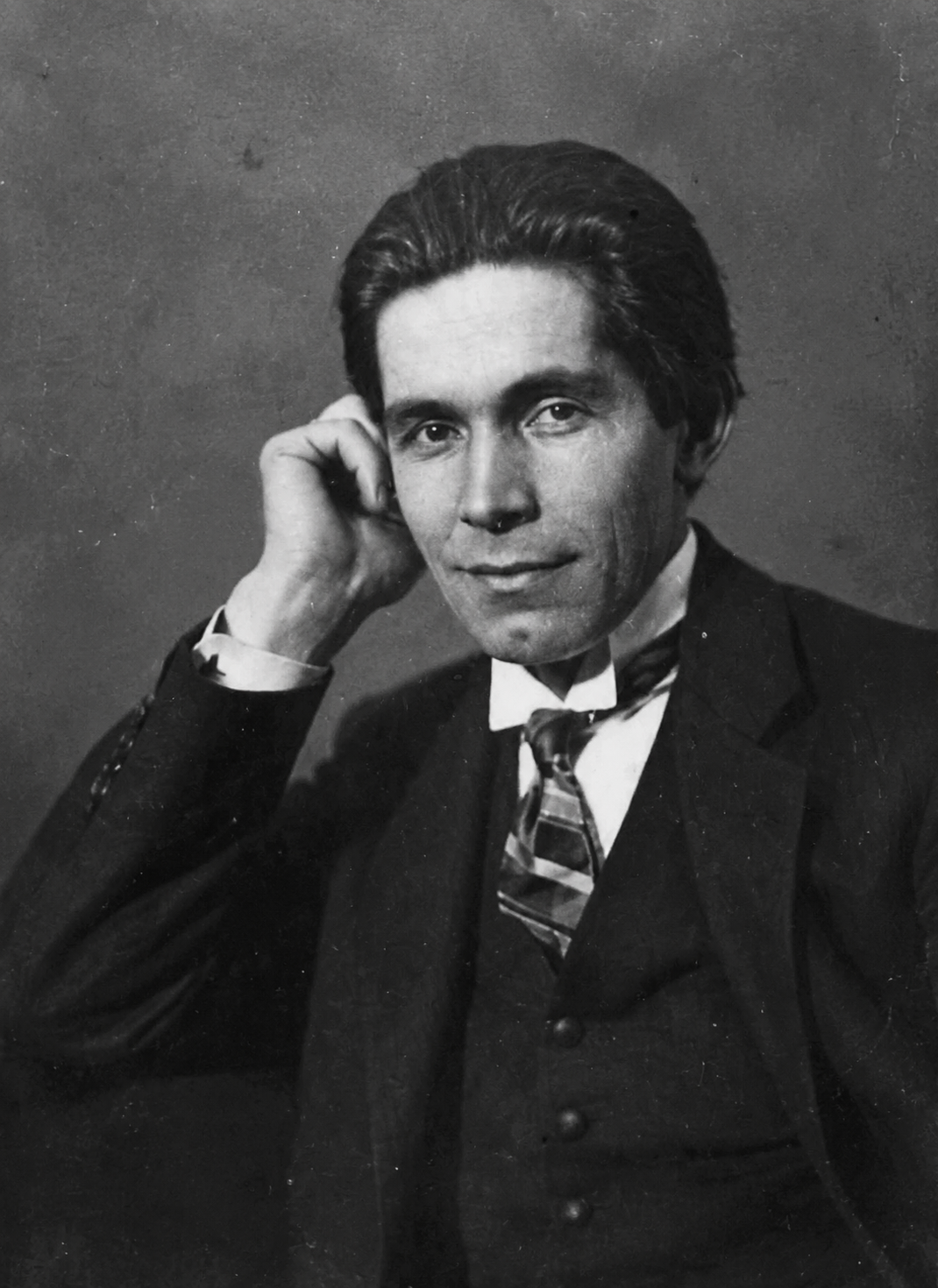
The eldest of the five sons of Solomon and Gadzi Gutnov, his Ossetian name was Elbyzdyko Gutnov. Eugen himself used the patronymic “Alexandrovich,” which is also the form found in the sources. He was born on 11 March 1888. In Germany, where he spent most of his life, he was known as Eugen Gutnoff (Evgeniy Gutnoff).
From 1903 to 1907 he studied and worked at the newspaper Kazbek in Vladikavkaz. He then moved to St Petersburg and found work as a typesetter at the Ministry of Finance printing house; according to Zefira Butaeva, he also helped print leaflets for a Social Democratic group there. In 1912 he was diagnosed with pulmonary tuberculosis. A council of allopathic physicians gave him no more than three to six months to live, but the St Petersburg homeopath Professor Lev Yevgenyevich Brazol cured him, as later lung X-rays confirmed. Eugen’s own account identifies this illness as the primary reason for his departure abroad. He left Russia on 8 November 1913 and thereafter lived in Berlin.
In May 1919, Eugen registered his own publishing house in Berlin; a small private printing shop operated alongside it from 1919 to 1925. Between 1921 and 1923, the literary and artistic journal Spolokhi formed around the publishing house. It was edited by A. Drozdov from 1921 until his move to the newspaper Nakanune in 1923, and published work by K. D. Balmont, I. A. Bunin, N. M. Minsky, N. A. Otsup, V. F. Khodasevich, M. A. Voloshin, and A. N. Tolstoy. Historians of Russian émigré literature estimate that Gutnov’s publishing house issued as many as 215 titles on philosophy, literature, natural science, and culture; Ya. I. Berdichevsky documented 89 titles, published chiefly between 1920 and 1924.
An important chapter in Eugen’s life was his relationship with Gappo Baev, a prominent Ossetian educator and journalist, one of the founders of the Ir publishing house and a former mayor of Vladikavkaz. Baev had helped the young Gutnov at the beginning of his printing career. In 1921, after learning of Baev’s desperate circumstances in Constantinople, Eugen and Frida sought permission for him to enter and work in Germany, guaranteed his financial support, sent him money, and offered him accommodation. With the assistance of Baron Woldemar von Uexküll, Baev received permission and arrived in Berlin in January 1922. Differences later emerged between the two men: Eugen expected Baev to take a more active part in the publishing house, while Baev devoted much of his time to scholarly work. The surviving documents do not, however, establish a final break, and Baev later spoke positively of Gutnov’s publishing house and its contribution to Ossetian letters. Read more in their published correspondence.
Eugen also helped his younger brother Elbrus move to Germany and pursue his studies there after arriving in Berlin in 1922. At the same time, he published and translated into Ossetian books by Ossetian writers, including Kosta Khetagurov, G. Maliev, and A. Guluyev, and sent them to Vladikavkaz. He assisted local printing houses in purchasing modern equipment and typefaces and travelled to Vladikavkaz in 1927 specifically to resolve these organisational matters. His publishing activity continued at least until 1931, although the Berlin printing shop itself closed in 1924; the last documented reference to the publishing house dates from 1933.
Eugen corresponded with his brother Kirill until 1935. These letters became the principal “material evidence” supporting the charges brought against Kirill following his arrest in 1937. More information appears on the page “Kirill Solomonovich Gutnov” and in Zefira Butaeva’s “The Brothers’ Tragedy.”
Eugen was married to Frida, the daughter of the owner of the Berlin printing house where he had begun work as a typesetter; in time, he inherited the business. They had a son, Kostya.
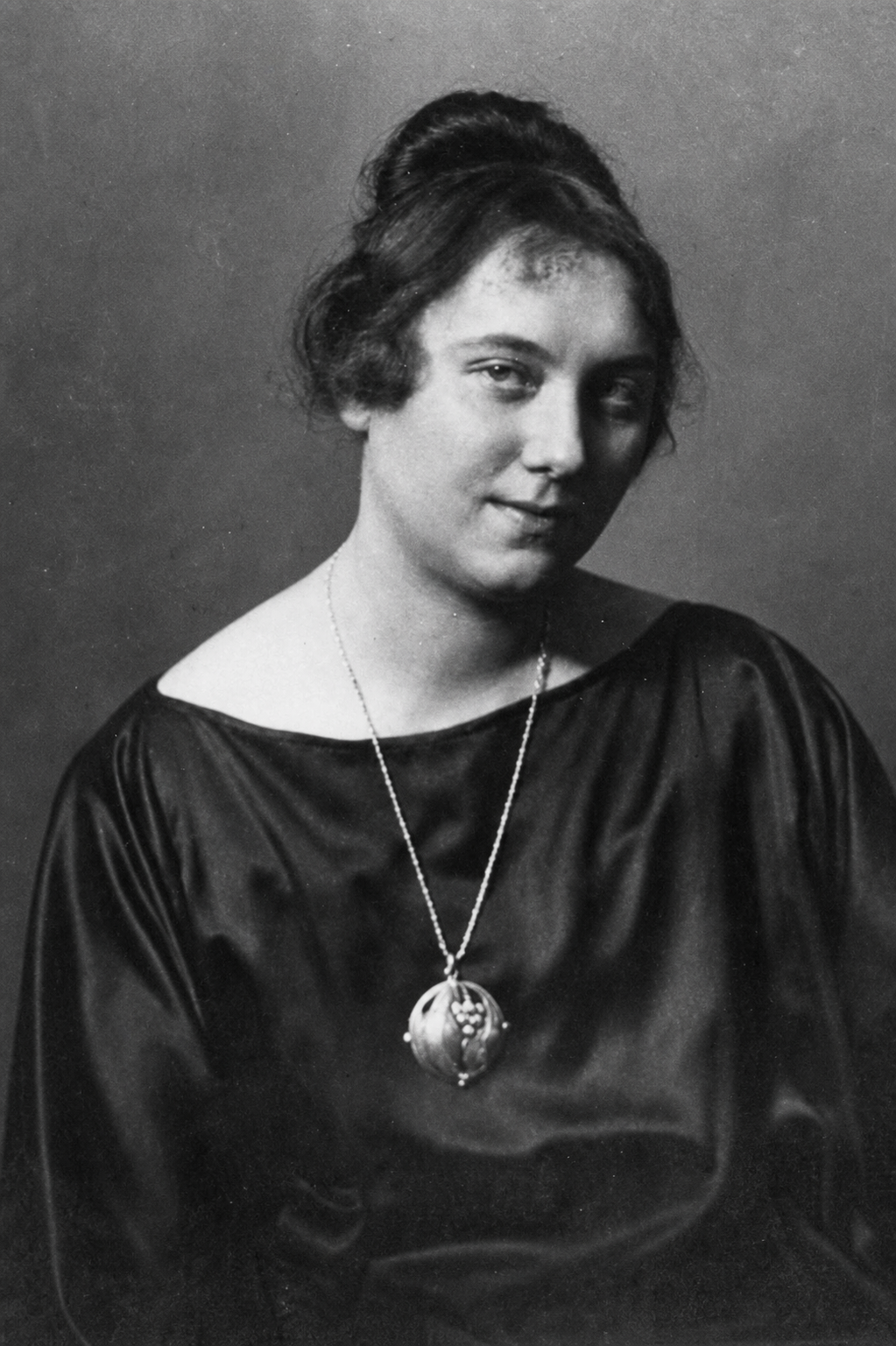
Contact with his family in the USSR ceased in the late 1930s and was restored only in the late 1960s, when Elbrus located his brother through the Soviet branch of the International Red Cross. Eugen’s five surviving letters to Elbrus, written between August 1967 and May 1968, describe the last known years of his life: the loss of all his property and his house outside Berlin during the war, an unsuccessful attempt to start a new business, poverty, and illness. At the end of 1968, rising prices, a modest pension, and an incurable illness forced Eugen to leave West Berlin for West Germany. He first moved to the village of Vehlen near Obernkirchen and later to Heeßen near Bad Eilsen. His subsequent fate and exact date of death remain unknown. He bequeathed his body to the University of Berlin for medical research.
Zefira Butaeva tells the story of Eugen, Kirill, and Elbrus Gutnov in “The Brothers’ Tragedy”. Further details of Eugen’s life are preserved in his letters to his brothers. Zefira Butaeva published his letters to Kirill in “An Ossetian Publisher from Berlin” (Daryal, 1991, No. 3, pp. 160–176), while the historian Dmitry Gutnov published the letters to Elbrus in “Life after Life” (Bibliophile News, vol. 17, Moscow, 2013, pp. 25–34). The 1921 correspondence of Eugen and Frida Gutnov with Gappo Baev was published by Svetlana Darchieva in “A ‘Gutenberg’ from Ossetia in Berlin” (Proceedings of the North Ossetian Institute for Humanitarian and Social Studies, issue 60 (99), 2026, pp. 164–195); the archival documents of this correspondence are also examined in scholarly articles by Vittorio Springfield Tomelleri. All sources are listed in the “Links” section below.
Read next: Eugen’s letters to Kirill